Piles of sheets and gowns waited in the laundry room at Dominica’s public infirmary, a facility that serves about 95 elders with limited staff. The industrial washer had failed, and everything was being scrubbed by hand.
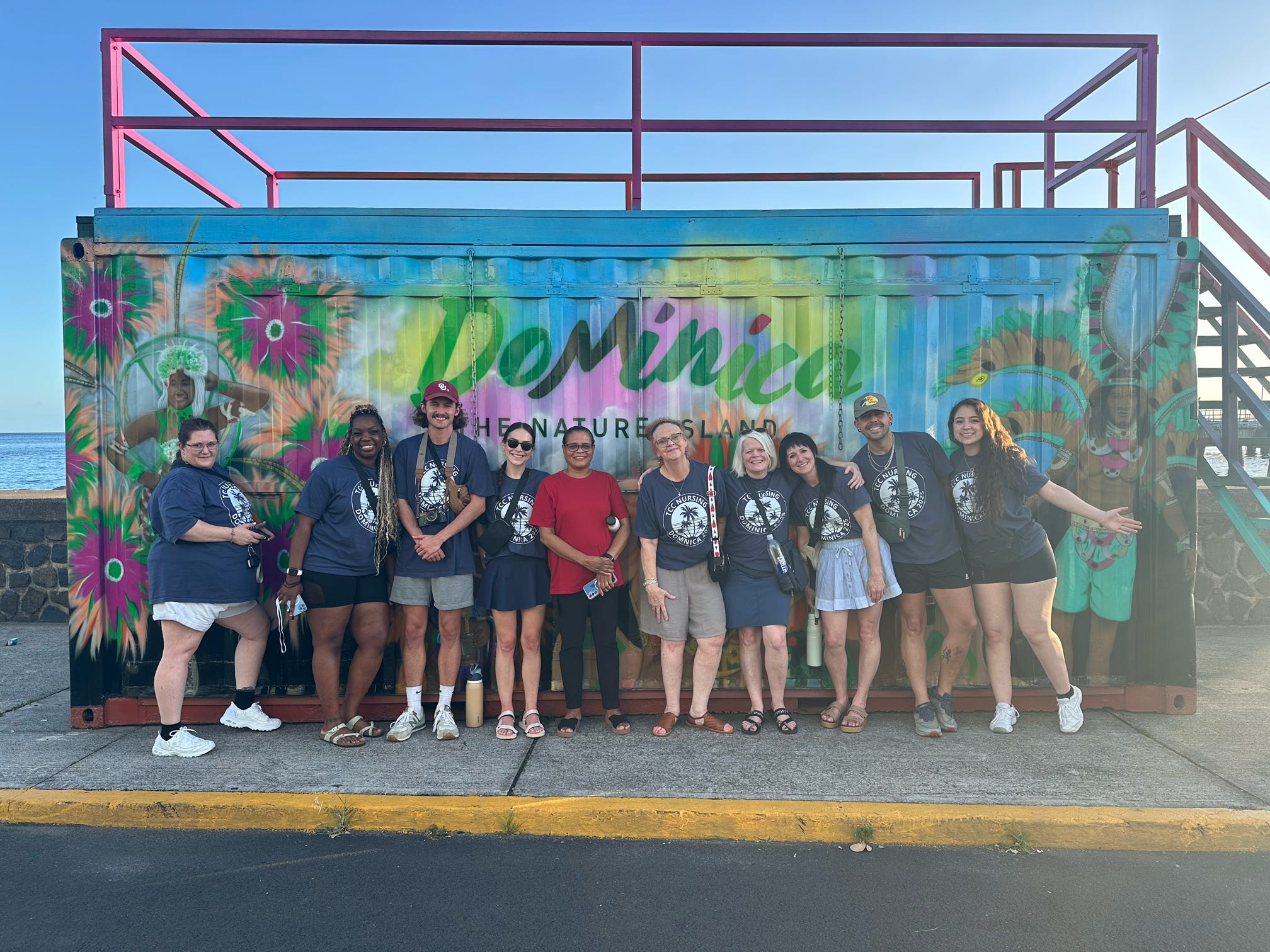
Ten TCC Nursing students, alumni, and faculty members had arrived on the Caribbean island for a 10-day service-learning course. They were prepared to adapt to paper charting, ration supplies, and learn by listening. They were not prepared to watch caregivers lose hours each day hand-washing linens.
Nursing student Kelly Kochner saw the overwhelming need and challenged her classmates to act.
“I said, we can do this as a team. We can raise the money to get this infirmary a new washing machine. Somebody said, ‘maybe by next month,’ and I said, ‘No, I think we can do this within the next 24 hours,’” says Kochner.
That night, the team wrote a short appeal, shared it across social media, and went to sleep. By morning, donors had covered the $4,000 cost of a commercial washer plus shipping from Miami.
The washer was only one moment. The 10 days changed how these students will care for patients in Tulsa.
What Service-Learning Looks Like
Unlike traditional study abroad programs, service-learning courses put students in direct community service settings under faculty supervision. In Dominica, that meant rotating through the public infirmary, a private elder-care facility, the island’s main hospital, and home-health visits.
TCC’s Director of Faculty Development and Global Learning Douglas Price says service-learning pushes students into situations they cannot fully prepare for in a classroom.
“You see the real-world application of skills learned in the classroom here in Tulsa and applied in another world area,” says Price. “That application sets a student up for dealing with situations later in a clinic or hospital at home. It’s not a new experience. It’s like, ‘I’ve done this before.’”
The group also visited schools, donating about 60 backpacks filled with supplies and clip-on fans to help children manage in classrooms without air conditioning. Assistant Professor of Nursing Lanette Julian says donations, which also included medical supplies for the infirmary and hospital, were guided by a wish list gathered during last year’s pilot trip.
“We had such a good experience with Dominica, we wanted to go back and reconnect with those people and take even more donations. This year, we took nine checked bags full of donations,” Julian says.
Partnerships that Last
For many students, the most meaningful lessons came from the bonds they formed. Alumni leader Colton Edwards, now an ICU nurse at OSU Medical Center and a master’s student at Northeastern State University, recognized residents from last year’s trip. One man remembered him by his earrings.
“Every single person I saw last year, a lot of them I got to see this year, and it was immediate. They hugged me, or said, ‘Colton, we’re so excited to see you,’” Edwards says. “One man’s name was Greg, and he literally just beamed from ear to ear. He said, ‘I remember you. I remember your ears. You’re from Oklahoma.’”
Another resident proudly demonstrated how far she could extend her arm after doing the exercises TCC students had taught her the year before.
Julian says the exchange works both ways.
“Every single one of the students said that they got more out of this trip. The people there did more for them than what we did for them,” she says.
Outcomes for Students and Patients
Service-learning trips are rehearsals for the unknown, according to Price.
“You cannot simulate every interpersonal variable in a lab,” Price says. “When students navigate language differences, different documentation systems, and new expectations, they come home calmer under pressure. Patients feel that.”
Julian says communication was one of the most important skills students practiced.
“Communication is such a big aspect of nursing … and a big part of communication is listening,” she says.
Students gained experience making clinical decisions with limited supplies, communicating across cultural differences, and taking on leadership roles such as fundraising and team coordination.
“It was really exciting to celebrate victories with the newer students and see how much they grew in just a few days,” says Edwards.
Kochner says the experience reshaped how she will approach patients in the future.
“It showed me that there are people hurting, no matter where you go; physically, mentally, emotionally, spiritually,” Kochner says. “Every patient has a story, and in that moment, I get to be part of helping, even in a small way. That’s powerful.”